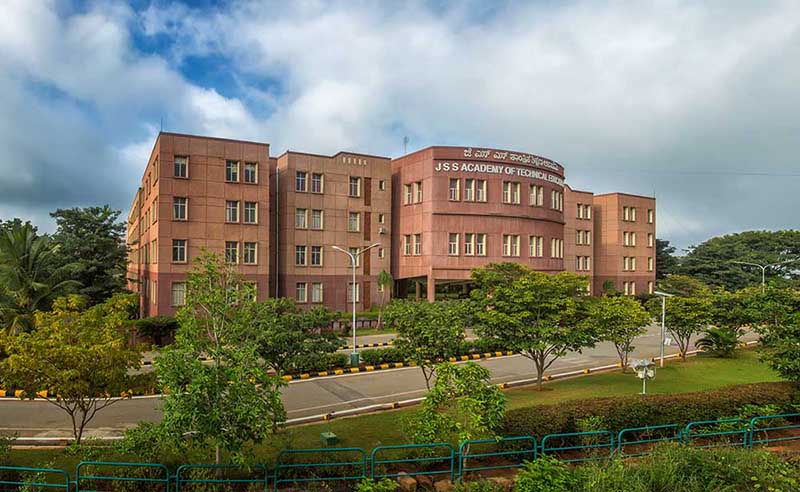
The Department of Bachelor of Computer Applications (BCA) at JSS Academy of Technical Education (JSSATE), Bengaluru, was established in 2026 with an annual intake of 60 students.
Being affiliated with Visvesvaraya Technological University (VTU), Belagavi, the department places equal emphasis on infrastructure and faculty to provide students with a class-apart education. The Department aims to be an epicentre for nurturing innovation, research, entrepreneurship, and to build a pool of human resources for the growing demand in the IT industry
| # | Program Educational Outcomes :-The Graduates will be able to: |
|---|---|
| PEO-1 | Graduates will be employed as competent software professionals or pursue higher education in Computer Applications and allied fields. |
| PEO-2 | Graduates will apply computing knowledge, analytical skills, and modern tools to design and develop innovative, quality software solutions. |
| PEO-3 | Graduates will demonstrate professionalism, ethical responsibility, effective communication, and teamwork in their professional and social environments. |
| PEO-4 | Graduates will engage in continuous learning, research, and entrepreneurial pursuits to adapt to evolving technologies. |
| # | Program Specific Outcomes :-The Graduates will be able to: |
|---|---|
| PSO-1 | Application Development Competency: Ability to design, develop, and deploy web, mobile, and enterprise applications using contemporary programming languages, frameworks, and databases. |
| PSO-2 | Emerging Technology Adaptability: Ability to apply concepts of data analytics, cloud computing, and artificial intelligence/machine learning to build data-driven and intelligent solutions. |
| PSO-3 | Entrepreneurial & Professional Readiness: Ability to demonstrate entrepreneurial thinking, project management skills, and professional/ethical conduct to launch startups or excel in the IT industry. |
| # | Knowledge and Attitude Profile (WK) |
|---|---|
| WK-1: | A systematic, theory-based understanding of the natural sciences
applicable to the discipline and awareness of relevant social sciences.
|
| WK-2: | Conceptually-based mathematics, numerical analysis, data analysis,
statistics and formal aspects of computer and information science to support
detailed analysis and modelling applicable to the discipline.
|
| WK-3: | A systematic, theory-based formulation of engineering fundamentals
required in the engineering discipline.
|
| WK-4: | Engineering specialist knowledge that provides theoretical frameworks and bodies of knowledge for the accepted practice areas in the engineering discipline; much is at the forefront of the discipline.. |
| WK-5: | Knowledge, including efficient resource use, environmental impacts, whole-life cost, re-use of resources, net zero carbon, and similar concepts, that supports engineering design and operations in a practice area. |
| WK-6: | Knowledge of engineering practice (technology) in the practice areas in the engineering discipline. |
| WK-7 | Knowledge of the role of engineering in society and identified issues in
engineering practice in the discipline, such as the professional responsibility of
an engineer to public safety and sustainable development.
|
| WK-8 | Engagement with selected knowledge in the current research literature of the discipline, awareness of the power of critical thinking and creative approaches to evaluate emerging issues. |
| WK-9 | Ethics, inclusive behavior and conduct. Knowledge of professional ethics, responsibilities, and norms of engineering practice. Awareness of the need for diversity by reason of ethnicity, gender, age, physical ability etc. with mutual understanding and respect, and of inclusive attitudes. |
| # | Program Outcomes :-The Graduates will be able to: |
|---|---|
| PO-1 | Engineering Knowledge: Apply knowledge of mathematics, natural science, computing, engineering fundamentals and an engineering specialization as specified in WK1 to WK4 respectively to develop to the solution of complex engineering problems.. |
| PO-2 | Problem Analysis: Identify, formulate, review research literature and analyze complex engineering problems reaching substantiated conclusions with consideration for sustainable development. (WK1 to WK4) |
| PO-3 | Design/Development of Solutions: Design creative solutions for complex engineering problems and design/develop systems/components/processes to meet identified needs with consideration for the public health and safety, whole-life cost, net zero carbon, culture, society and environment as required. (WK5) |
| PO-4 | Conduct Investigations of Complex Problems: Conduct investigations of complex engineering problems using research-based knowledge including design of experiments, modelling, analysis & interpretation of data to provide valid conclusions. (WK8). |
| PO-5 | Engineering Tool Usage: Create, select and apply appropriate techniques, resources and modern engineering & IT tools, including prediction and modelling recognizing their limitations to solve complex engineering problems. (WK2 and WK6) |
| PO-6 | The Engineer and The World: Analyze and evaluate societal and environmental aspects while solving complex engineering problems for its impact on sustainability with reference to economy, health, safety, legal framework, culture and environment. (WK1, WK5, and WK7). |
| PO-7 | Ethics: Apply ethical principles and commit to professional ethics, human values, diversity and inclusion; adhere to national & international laws. (WK9) |
| PO-8 | Individual and Collaborative Team work: Function effectively as an individual, and as a member or leader in diverse/multi-disciplinary teams. |
| PO-9 | Communication: Communicate effectively and inclusively within the engineering community and society at large, such as being able to comprehend and write effective reports and design documentation, make effective presentations considering cultural, language, and learning differences |
| PO-10 | Project Management and Finance: Apply knowledge and understanding of engineering management principles and economic decision-making and apply these to one’s own work, as a member and leader in a team, and to manage projects and in multidisciplinary environments. |
| PO-11 | Life-Long Learning: Recognize the need for, and have the preparation and ability for i) independent and life-long learning ii) adaptability to new and emerging technologies and iii) critical thinking in the broadest context of technological change. (WK8) |
The Bachelor of Computer Applications (BCA) program provides students with a strong foundation in computer science, programming, software development, database management, networking, and emerging technologies. It combines theoretical knowledge with practical learning to develop problem-solving, analytical, communication, and technical skills. The program prepares graduates for diverse career opportunities in the IT industry, including roles such as software developer, web developer, data analyst, system administrator, database administrator, and cybersecurity professional. It also provides a strong academic foundation for pursuing higher studies such as MCA, M.Sc. in Computer Science, MBA, and other specialized programs.
The BCA program opens the door to a wide range of career opportunities in the rapidly growing information technology sector. Graduates can pursue roles such as Software Developer, Web Developer, Mobile Application Developer, Data Analyst, Database Administrator, System Administrator, Network Administrator, Cybersecurity Analyst, Cloud Support Associate, Software Tester, and Technical Support Executive. They can find employment in IT companies, banks, educational institutions, government organizations, start-ups, and multinational companies. Graduates may also pursue higher education such as MCA, M.Sc. in Computer Science, MBA, or specialized certifications to enhance their knowledge and career prospects. .
Adobe, Amazon, IBM, Accenture, Flipkart, Cognizant, Wipro, Mindtree, TCS, Bosch, Infosys, Unisys, HCL, Mphasis
Samsung, Intel, Cognizant, Onedirect, AOL, Betsol, Textron, Credator, Advanced systems Pvt. Ltd, Headspin, Evertz, mUni Campus
• M/s Honeywell
• M/s Infosys
• M/s. Qualitas Technologies Pvt. Ltd.