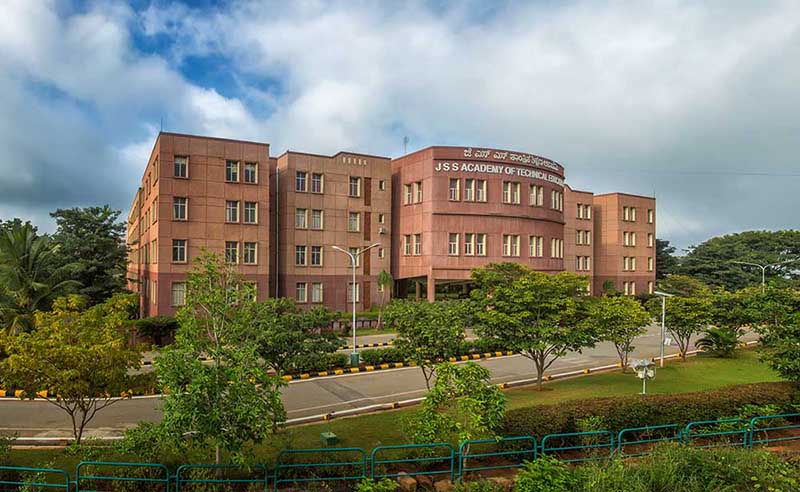
The Department of Information Science and Engineering is established in the year 1999. The current intake is 180. Department is strengthened by well-qualified faculty members main aim is to emphasize the overall growth and development of students with cutting-edge technology by inculcating competence, commitment & teamwork. The Department comprises excellent infrastructure with well-equipped Laboratories, Classrooms, and Departmental Library.
The Student forum SAMYOG is solely for the benefit of the student community established with the aim of by the students, of the students and from the students. The students actively take part in co-curricular activities like projects, paper & poster presentations, coding, debugging, etc. In the extra-curricular events like NSS, sports, college fest, and the preparation of technical magazines & newsletters . They are also participating in self-initiated outreach activities like YODHA , Book borrow.com, bookbeka.com, medical camps like blood donation camps, eye testing camps, dental camps, and Ayurvedic camps, etc. Industry interaction is established through MOUs. A good number of industrial visits, Invited lecturers, workshops, seminars, and webinars are also organized regularly in emerging technologies from experts of industries and institutions.
Most of our students are well placed in fortune 500 companies. Our students have recorded very good performance in competitive examinations such as GATE, GRE, GMAT, TOEFL, CAT, PGCET, etc. Many of our Alumni joined MS programs in the leading and reputed Universities in the world.
Further, most of the faculty members and students won the best paper awards, the best poster awards, the best project awards in National / International Conferences across the globe. Our faculty members and students are also members of professional societies like ISTE, CSI, IEEE, IEI, ACM., etc. Under the R & D activity, Faculty are engaged in the publication of research papers in top journals indexed in Web of Science and Scopus indexed journals. The research Promotion Scheme project sponsored by AICTE has been completed.
| # | Program Educational Objectives:-The Graduates will be able to: |
|---|---|
| PEO - 1 | To demonstrate analytical and technical problem solving abilities. |
| PEO - 2 | To conversant in the developments of Information Science and Engineering, leading towards the employability and higher studies. |
| PEO - 3 | To engage in research and development leading to new innovations and products. |
| # | Program Specific Outcomes :-The Graduates will be able to: |
|---|---|
| PSO-1 | Apply the appropriate programming constructs for solving engineering problems. |
| PSO-2 | Adapt to software development methodologies. |
| PSO-3 | Demonstrate the knowledge towards the domain specific initiatives of Information Science and Engineering. |
| PO-1 | Engineering Knowledge: Apply knowledge of mathematics, natural science,computing, engineering fundamentals and an engineering specialization asspecified in WK1 to WK4 respectively to develop to the solution of complexengineering problems. |
| PO-2 | Problem analysis: Identify, formulate, review research literature and analyzecomplex engineering problems reaching substantiated conclusions withconsideration for sustainable development. (WK1 to WK4) |
| PO-3 | Design/development of solutions: Design creative solutions for complexengineering problems and design/develop systems/components/processes tomeet identified needs with consideration for the public health and safety,whole life cost, net zero carbon, culture, society and environment as required.(WK5) |
| PO-4 | Conduct investigations of complex problems: Conduct investigations ofcomplex engineering problems using research-based knowledge includingdesign of experiments, modelling, analysis |
| PO-5 | Engineering Tool Usage: Create, select and apply appropriate techniques,resources and modern engineering |
| PO-6 | The Engineer and The World: Analyze and evaluate societal andenvironmental aspects while solving complex engineering problems for itsimpact on sustainability with reference to economy, health, safety, legalframework, culture and environment. (WK1, WK5, and WK7). |
| PO-7 | Ethics: Apply ethical principles and commit to professional ethics, humanvalues, diversity and inclusion; adhere to national |
| PO-8 | Individual and Collaborative Team work: Function effectively as an individual,and as a member or leader in diverse/multi-disciplinary teams. |
| PO-9 | Communication: Communicate effectively and inclusively within theengineering community and society at large, such as being able tocomprehend and write effective reports and design documentation, makeeffective presentations considering cultural, language, and learning differences |
| PO-10 | Project Management and Finance: Apply knowledge and understanding ofengineering management principles and economic decision-making and applythese to ones own work, as a member and leader in a team, and to manageprojects and in multidisciplinary environments |
| PO-11 | Life-Long Learning: Recognise the need for, and have the preparation andability for i) independent and life-long learning ii) adaptability to new andemerging technologies and iii) critical thinking in the broadest context oftechnological change. (WK8) |
The department Academic advisory committee comprises Principal,Head of Department,Senior faculties,one external academician,two members from industry,three alumni members and two student members. The committee will review the academic quality and suggest improvements in the related areas.
Program Assessment Committee – PAC is constituted to assess the academic process of the program.
The following are the roles of the Program Assessment Committee:
1. Assist in framing Course Outcomes and mapping COs to POs / PSOs.1. Dr. Nagamani N P (Associate Professor & Head ) - Chairman.
2. Dr. D V Ashoka (Professor) - Member.
Details of Lab facilities
Additional Lab Facility
| Name of the Laboratory | Name of the Important Equipment |
|---|---|
| IOT |